

Why Is a Firm Mattress Important?
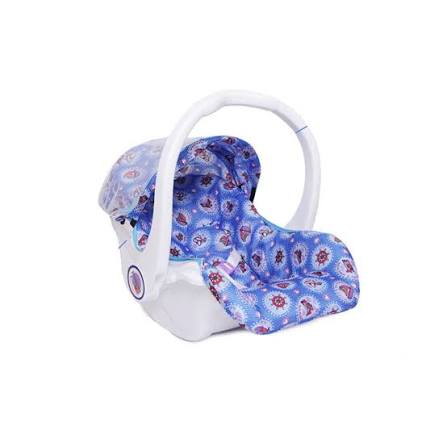
A firm, flat, and level sleep surface is one of the most critical safety features of any baby cradle. Research consistently shows that babies who sleep on soft surfaces are at a significantly higher risk of Sudden Infant Death Syndrome (SIDS) and other sleep-related deaths, including accidental suffocation.
The Science Behind Firmness
A firm mattress is defined as one that returns to its original shape quickly when pressed and does not “hug” or contour to the baby’s body. When a mattress is too soft, a baby’s face can sink into the surface, which can obstruct their airway and lead to rebreathing exhaled carbon dioxide. Studies have shown that firmer mattresses are associated with lower rebreathing risk, directly supporting the recommendation for firm sleep surfaces.
The NHS advises that if a mattress is not firm enough, a baby’s head can sink into it, making it difficult for them to lose heat and potentially causing them to become too hot—another risk factor for SIDS.
Firmness vs. Softness: A Critical Distinction
Parents should be aware that many crib mattresses are dual-sided, with a soft side and a firm side. The firm side must always face up for infants. For cradle and bassinet mattresses specifically, the mattress should not be thicker than 3.8 centimetres, and it must fit snugly so that the gap between the mattress and the sides of the cradle is no more than 3 centimetres. A mattress that is too small creates dangerous gaps where a baby can become trapped.
Testing Firmness at Home
There is a simple informal test parents can conduct to assess whether a mattress is firm enough. Press your open hand firmly into the centre of the mattress and along the edges. The surface should spring back quickly and should not leave a visible indentation or feel spongy.
What Other Safety Features Should a Cradle Have?
Beyond a firm mattress, a safe cradle should incorporate several other design features to protect a newborn.
Stable Construction and Locking Mechanisms
A cradle must have enough strength and stability to safely support a baby. For rocking cradles, a locking device is essential and must be engaged whenever the baby is sleeping or unattended. Incident data show that locking mechanism failures have resulted in potentially fatal scenarios, such as a cradle continuing to rock and causing an infant to roll into a face-down position. Rocking cradles should also have a tilt limiter to restrict the degree of tilt to no more than 10 degrees.
Safe Materials and Construction
The cradle should be free from sharp points, edges, or gaps that could trap a baby’s head, neck, limbs, or fingers. Mesh or fabric sides must be firm enough that they do not cover a baby’s nose or mouth. All wood and metal parts should be free of splinters, sharp edges, cracks, and loose nuts or bolts.
Appropriate Size and Weight Limits
Cradles and bassinets are designed for babies from birth until they begin to roll over, push up on their hands and knees, or sit up unaided—typically around 4 to 6 months of age. Parents must stop using the cradle once the baby reaches the manufacturer’s recommended maximum weight or begins to show these developmental signs, as the risk of falls and suffocation increases significantly beyond this point.
What Are the Different Types of Baby Cradles?
Baby cradles come in several designs, each with distinct advantages for different families and living situations.
Stationary Cradles
Stationary cradles have a fixed base and do not rock or swing. They are generally more stable and are a good choice for parents who prioritise a completely still sleep surface. They are often simpler in construction and may be more affordable than rocking models.
Rocking Cradles
Rocking cradles are designed to provide a gentle rocking or gliding motion, which can help soothe a newborn and remind them of the movement they experienced in the womb. Some rock back to front, while others rock side to side. As noted above, any rocking cradle must have a locking mechanism that is used during sleep.
Portable Cradles
Portable cradles are lightweight and often come with wheels or are designed to be easily moved from room to room. They are convenient for parents who want their baby nearby during the day. However, portability should never come at the expense of stability—the cradle must still stand firmly on the floor and have sturdy anti-slip feet. One notable portable cradle was recalled because its sleep surface provided an incline angle greater than 7 degrees, posing risks of entrapment and suffocation.
Suspended Cradles
Suspended cradles, which hang from a frame or ceiling, are a traditional design in some cultures. However, these carry significant risks. A study of suspended rocking cradles found that when a locking pin was not used, the outcomes were often fatal—ten of fifteen infants in the study died. These cradles are generally not recommended for unsupervised sleep.
Cradle vs. Bassinet vs. Crib: What Is the Difference?
Understanding the distinctions between these infant sleep products can help parents make an informed choice.
A cradle is a small bed that typically has a rocking or gliding motion and is used for newborns until around 4 to 6 months. A bassinet is similar in size but generally has fixed legs or wheels rather than a rocking mechanism. Both are intended for the newborn period only.
A crib, by contrast, is larger and stationary, with high side bars for safety. Cribs can be used from infancy through toddlerhood, often up to age two or three. While a cradle or bassinet is convenient for keeping a newborn close during the night, a crib will ultimately be needed as the baby grows.
Key Takeaways for Choosing a Newborn Cradle
When selecting a cradle for a newborn, the following checklist can serve as a practical guide:
- Firm, flat mattress that fits snugly with gaps no larger than 3 centimetres
- Stable frame that stands firmly on the floor
- Locking mechanism for any rocking or swinging feature
- No sharp edges, gaps, or entrapment hazards
- Appropriate size and weight limits for newborn use
- Compliance with current safety standards (such as ASTM F2194 for bassinets and cradles)
- A clear space away from blinds, curtain cords, heaters, and electrical appliances
The best baby cradle for a newborn is one that prioritises safety above all else. A firm, flat sleeping surface, a stable and secure construction, and strict adherence to safety guidelines will provide the foundation for safe sleep during the critical early months.





 Bass Dual EQ Bluetooth 5.0 Wireless Speaker